The mesmerizing world of live casino gaming has revolutionized online gambling, bringing the authentic casino floor experience directly to players' screens. Behind those crisp HD streams and professional dealers lies a complex, expensive infrastructure that few players ever consider. Understanding the true cost of operating a live casino studio reveals the substantial investment required to deliver seamless, high-quality gaming experiences.
The Initial Capital Investment: Setting Up a Professional Live Casino Studio
Establishing a live casino studio represents one of the most significant upfront investments in the gaming industry. The initial capital requirements typically range from $2-5 million for a modest setup to over $20 million for state-of-the-art facilities operated by industry leaders like Evolution Gaming.
The studio space itself must meet stringent requirements. A professional facility needs approximately 10,000-50,000 square feet, depending on the number of tables and games offered. Location is crucial – studios require proximity to talent pools for dealers and technical staff, reliable high-speed internet infrastructure, and favorable regulatory environments. Many operators choose established gaming jurisdictions like Malta, Latvia, or Romania for their live casino operations.
Construction and renovation costs form a substantial portion of the initial investment. Studios require specialized lighting systems designed for broadcasting, professional soundproofing to eliminate ambient noise, climate control systems to maintain optimal conditions for equipment and staff comfort, and custom-built gaming tables with integrated technology. The aesthetic design must create an authentic casino atmosphere while accommodating multiple camera angles and broadcasting requirements.
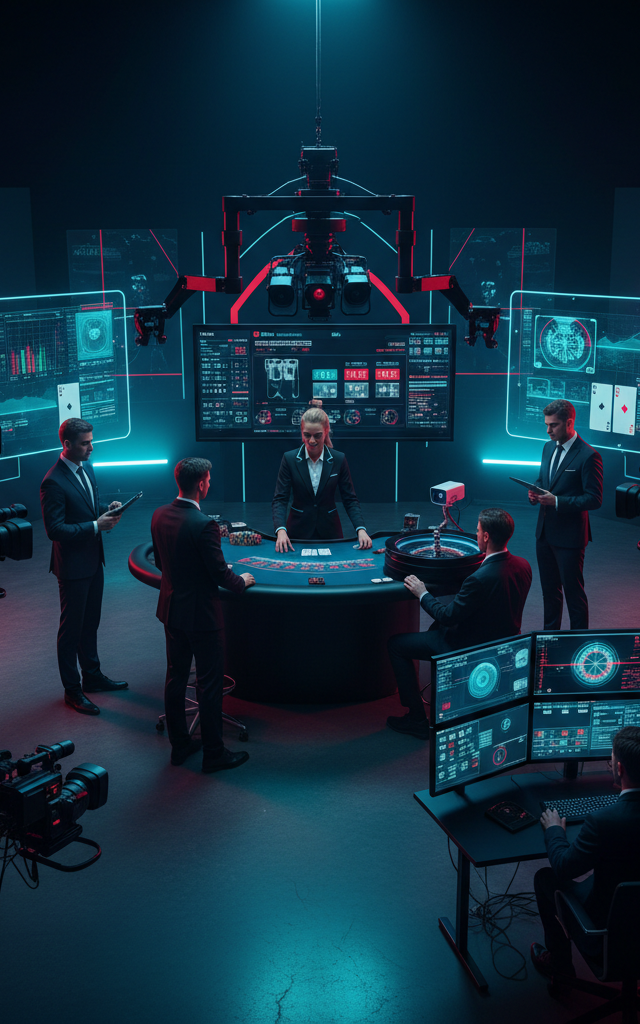
Technological infrastructure represents another major expense category. Each table requires multiple high-definition cameras – typically 6-12 per table to capture every angle of gameplay. Professional broadcasting equipment, including switchers, encoders, and streaming technology, can cost hundreds of thousands of dollars. The gaming control systems that manage bet placement, game logic, and integration with operator platforms require specialized software and hardware investments.
While live casino gaming operates differently from traditional slot mechanics, the evolution of digital gaming technology influences all sectors. Just as slot paylines evolved from single line to 117,649 Megaways and cluster pays, live casino technology continues advancing with features like multiple camera angles, instant replay capabilities, and enhanced user interfaces.
Ongoing Operational Expenses: The Hidden Costs of 24/7 Operations
Once operational, live casino studios face substantial ongoing expenses that dwarf many traditional online gaming operations. Staffing represents the largest operational cost, typically accounting for 60-70% of total running expenses.
Dealer wages vary significantly by location, but professional live casino dealers earn substantially more than traditional casino floor dealers due to their specialized broadcasting skills. In European studios, experienced dealers earn €25,000-45,000 annually, while in emerging markets like Georgia or Armenia, wages range from €8,000-18,000 yearly. Beyond base salaries, operators must account for benefits, training costs, and high turnover rates that necessitate continuous recruitment and onboarding.
Support staff requirements extend far beyond dealers. Each studio needs technical directors, camera operators, pit bosses, IT support specialists, compliance officers, and management personnel. A medium-sized studio typically employs 150-300 people across all shifts to maintain 24/7 operations.
Technology maintenance and upgrades represent another significant ongoing expense. Cameras, streaming equipment, and gaming software require regular updates and replacements. Equipment failure can cost thousands of dollars in lost revenue per hour, making redundant systems and preventive maintenance essential. Annual technology costs typically range from $500,000-2 million depending on studio size and game variety.
Utility costs for professional studios are substantial. High-powered lighting systems, numerous electronic devices, climate control for equipment and staff comfort, and redundant power systems create monthly electricity bills often exceeding $50,000-100,000. Internet connectivity costs are equally significant, as studios require multiple high-bandwidth connections with failover capabilities to ensure uninterrupted streaming.
Technology Infrastructure: The Backbone of Live Gaming
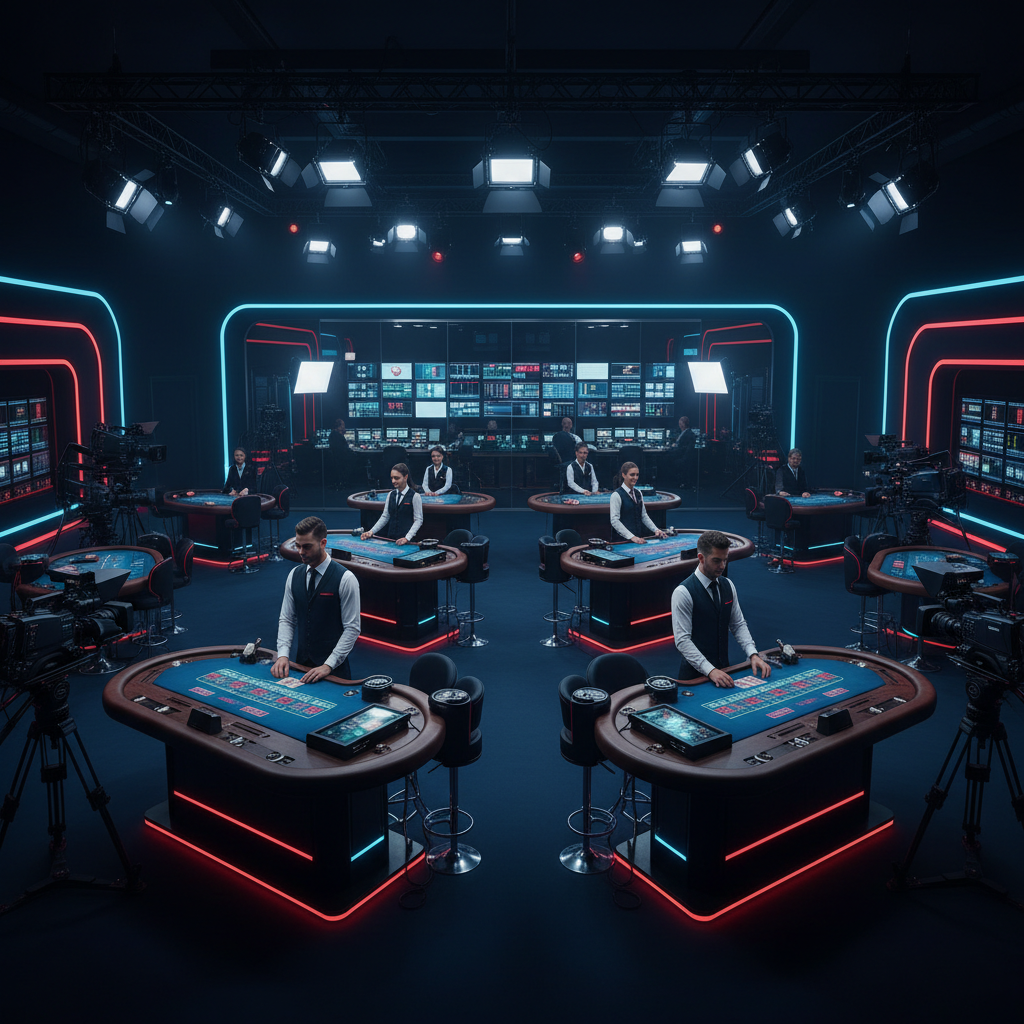
The technological infrastructure supporting live casino operations represents one of the most complex and expensive aspects of studio operations. Modern live casino studios are essentially television production facilities combined with sophisticated gaming platforms.
Camera systems form the foundation of the visual experience. Each table requires multiple cameras capable of 4K or higher resolution streaming. Specialty cameras include overhead shots for card and wheel tracking, close-up cameras for dealer interactions, and wide-angle shots establishing the casino atmosphere. Camera replacement cycles typically occur every 3-5 years, with individual professional cameras costing $10,000-30,000 each.
Streaming technology must handle massive data throughput while maintaining minimal latency. Studios process thousands of simultaneous video streams, with each player potentially receiving slightly different camera angles or betting interfaces. Content delivery networks (CDNs) ensure global players experience consistent, high-quality streams regardless of geographical location. These systems require constant monitoring and optimization, with annual CDN costs often exceeding $1 million for large operators.
Game control systems integrate multiple complex components. Optical character recognition (OCR) technology automatically reads cards and roulette results, eliminating human error and enabling instant result processing. Radio frequency identification (RFID) chips in cards and betting areas provide additional verification layers. These systems must integrate seamlessly with hundreds of different operator platforms globally.
Similar to how the best slot series of all time from Book of Dead to Gates of Olympus have evolved through technological advancement, live casino games continue incorporating new features like multiple betting options, side bets, and interactive elements that require ongoing development investment.
According to the Malta Gaming Authority, live casino operators must maintain comprehensive technical documentation and undergo regular audits to ensure system integrity and player protection, adding additional compliance and documentation costs.
Staffing and Training: Building a Professional Workforce
Human resources represent the most significant ongoing expense for live casino studios, but also the most critical element determining operational success. The quality of dealers and support staff directly impacts player satisfaction, retention, and ultimately revenue.
Dealer recruitment requires specific criteria beyond traditional casino experience. Live dealers must possess camera presence, multilingual capabilities, professional appearance, and technical aptitude for operating integrated gaming systems. Many studios conduct extensive auditions, testing candidates' ability to perform under camera pressure while managing multiple player interactions simultaneously.
Training programs typically last 4-8 weeks for new dealers, covering game rules, broadcasting techniques, customer service protocols, and technical system operation. Ongoing training addresses new game variants, software updates, and customer service excellence. Annual training costs per employee often exceed $3,000-5,000, with larger studios investing millions annually in workforce development.
Shift management presents unique challenges for 24/7 operations serving global markets. Studios must staff for peak hours across multiple time zones while maintaining consistent service quality. Holiday coverage, sick leave, and vacation scheduling require substantial overstaffing compared to traditional businesses. Many studios maintain 30-40% more staff than minimum requirements to ensure operational continuity.
Specialized positions command premium salaries. Experienced pit bosses with broadcasting experience earn $60,000-100,000 annually, while technical directors and senior management positions often exceed six-figure salaries. The competition for experienced live casino professionals has intensified as the industry expands, driving compensation costs higher.
Regulatory Compliance and Licensing: Navigating Complex Requirements
Operating live casino studios requires navigating complex regulatory frameworks that vary significantly across jurisdictions. Compliance costs represent a substantial ongoing expense that many operators underestimate during initial planning phases.
Licensing fees vary dramatically by jurisdiction. Malta Gaming Authority licenses cost approximately €25,000-50,000 initially, with ongoing annual fees. UK Gambling Commission licenses require similar investments, plus additional compliance requirements. Some jurisdictions charge percentage-based fees on gross gaming revenue, potentially costing operators millions annually as businesses scale.
Compliance staffing requirements are substantial. Dedicated compliance officers monitor gameplay for irregularities, maintain detailed records for regulatory reporting, oversee responsible gambling protocols, and coordinate with multiple regulatory bodies globally. Large studios employ 10-20 full-time compliance professionals, with annual compliance department costs often exceeding $1-2 million.
Auditing requirements impose additional expenses. Regular technical audits verify random number generation, game integrity, and system security. Financial audits ensure proper segregation of player funds and accurate reporting. Security audits assess data protection and anti-money laundering protocols. Annual auditing costs typically range from $200,000-500,000 for established operators.
Data protection compliance, particularly under GDPR and similar regulations, requires specialized technical infrastructure and legal oversight. Studios must implement comprehensive data security measures, maintain detailed consent records, and provide player data access capabilities. Non-compliance penalties can reach millions of euros, making robust compliance programs essential investments.
Revenue Models and Profitability: Understanding the Business Case
Despite substantial operational costs, successful live casino studios generate impressive revenue streams through diverse monetization models. Understanding these revenue mechanisms helps explain why operators willingly invest millions in studio infrastructure.
The primary revenue model involves licensing games to online casino operators globally. Studio providers like Evolution Gaming charge operators monthly fees per table plus revenue-sharing arrangements typically ranging from 15-25% of gross gaming revenue generated. Popular tables can generate $50,000-200,000 monthly revenue for studio operators.
Dedicated tables represent premium revenue opportunities. Operators pay substantially higher fees for branded tables featuring their logos and custom dealers. These arrangements often include minimum revenue guarantees and premium revenue-sharing terms. Large operators may pay $50,000-100,000 monthly for dedicated table access.
Side bet and feature development creates additional revenue streams. Studios continuously develop new betting options, game variants, and interactive features that appeal to different player segments. Successful innovations can be licensed across multiple tables and operators, creating scalable revenue growth.
Geographical expansion multiplies revenue potential. Studios serving European markets during European peak hours can simultaneously serve Asian markets during Asian peak times, maximizing table utilization across time zones. This global approach helps justify the substantial infrastructure investments required.
Breakeven timeframes for live casino studios typically range from 18-36 months, depending on initial scale and market penetration speed. Successful studios achieve impressive profit margins once operational efficiency is optimized and table utilization reaches capacity levels.