
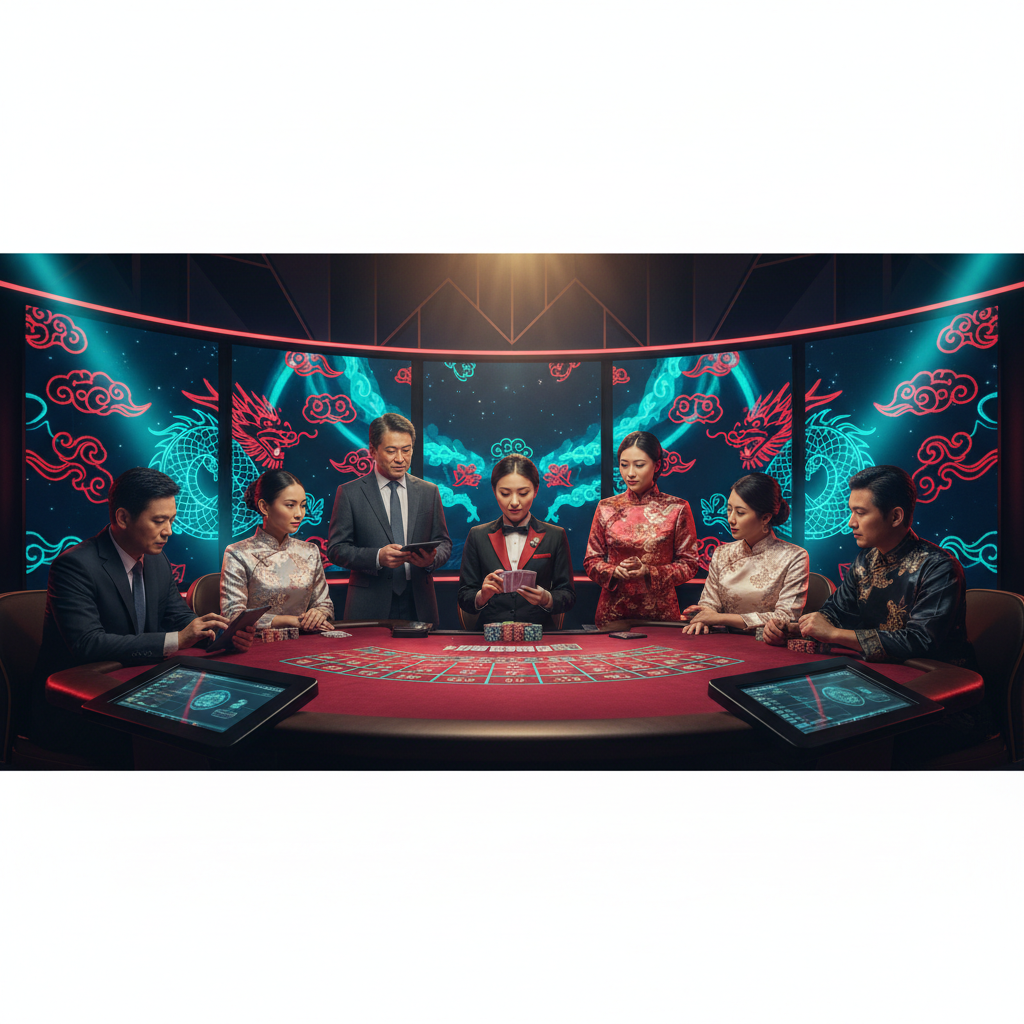
Walk into any live casino in Macau, Singapore, or Manila, and you'll immediately notice something striking: the baccarat tables are packed, often with high-stakes players, while other table games sit relatively quiet. This phenomenon isn't coincidental—baccarat has become the undisputed king of Asian gaming markets, generating an astounding 88-92% of all table game revenue in premium Asian jurisdictions. To understand this dominance, we need to explore the intricate tapestry of cultural heritage, deeply ingrained superstitions, mathematical preferences, and the sheer economic might of the Asian gaming market.
The Historical and Cultural Foundation of Baccarat in Asia
Baccarat's journey to Asian supremacy began centuries ago, though its modern incarnation took shape in the mid-20th century. The game arrived in Macau during the Portuguese colonial period, but it was the opening of the first official casino in 1962 that cemented its place in Asian gaming culture. Unlike Western markets where blackjack and craps dominated, Asian players gravitated toward baccarat's elegant simplicity and group-oriented gameplay.
The cultural affinity runs deeper than mere preference. In Chinese culture, gambling has historical roots in social bonding and celebration during festivals and special occasions. Baccarat's structure perfectly accommodates communal betting patterns—multiple players can bet on the same hand, creating a shared experience of winning or losing. This collective approach resonates with Asian cultural values that prioritize group harmony over individualism.
The game's name itself underwent cultural adaptation. In Mandarin, baccarat is called "百家樂" (bǎi jiā lè), which translates to "百家" (hundred families) and "樂" (happiness or joy). This linguistic translation imbues the game with positive connotations of bringing joy to many families—a powerful cultural message that enhances its appeal.
Furthermore, the game's association with sophistication and high society in James Bond films and European casinos translated well to Asian markets, where prestige and face (social standing) carry significant weight. High-stakes baccarat became a status symbol, a way for successful businesspeople and entrepreneurs to demonstrate their financial prowess within their social circles.
Superstition, Numerology, and the Mathematical Appeal
Superstition plays an enormous role in baccarat's Asian dominance—arguably more than any other factor. Asian gaming culture is steeped in numerology, feng shui principles, and pattern recognition beliefs that align perfectly with baccarat's gameplay mechanics.
The number eight holds particular significance in Chinese culture, pronounced "ba" in Mandarin, which sounds similar to "fa" (發), meaning prosperity or wealth. Baccarat's natural winning hand of eight or nine taps directly into this numerical preference. Players actively seek tables, seats, or betting positions associated with the number eight, believing it brings fortune. Casinos have capitalized on this by pricing VIP rooms and table minimums around the number eight.
Conversely, the number four is avoided because it sounds like "death" in many Asian languages. This extends to table selection, seat positioning, and even betting amounts—you'll rarely see Asian high rollers betting in increments involving the number four.
Pattern recognition and trend spotting form the backbone of how many Asian players approach baccarat. The scoreboards (referred to as "roads" or "roadmaps") that track previous outcomes are scrutinized intensely. Players believe in "streaks" and "patterns" that predict future outcomes, even though mathematically each hand is independent. These roadmaps include the Big Road, Bead Plate, Big Eye Road, Small Road, and Cockroach Road—complex tracking systems that cater specifically to this pattern-seeking behavior.
This belief system, while not mathematically sound, creates a psychological engagement that keeps players at the tables longer. The ritual of tracking, analyzing, and predicting based on perceived patterns becomes part of the entertainment value—a stark contrast to Western players who might approach the game more mechanically.
Ritual behaviors are equally important. Many players perform specific routines before placing bets: blowing on cards, bending them in particular ways, or refusing to look at their cards until the dealer's hand is revealed. Casinos accommodate these practices because they enhance player comfort and engagement. Some VIP rooms even allow players to squeeze (slowly reveal) cards themselves—a practice almost exclusive to Asian markets that adds drama and personal involvement to each hand.
Market Size and Economic Power Behind Asian Gaming
The sheer economic scale of Asian gaming markets cannot be overstated. Macau alone generates more gaming revenue than the entire Las Vegas Strip—approximately six to seven times more in peak years. In 2025, Macau's gaming revenue rebounded to over $28 billion annually, with baccarat accounting for roughly $24-25 billion of that total. Singapore's Marina Bay Sands and Resorts World Sentosa combined contribute another $4-5 billion annually, again predominantly from baccarat tables.
This concentration of wealth creates a self-reinforcing cycle. Casinos allocate more floor space to baccarat because it generates the highest revenue per square foot. More tables attract more players, which normalizes baccarat as the default table game choice. New players entering casinos see the crowds at baccarat tables and naturally gravitate toward them, perpetuating the dominance.
The VIP gaming segment—known as "junket" operations in Macau—specifically caters to ultra-high-net-worth individuals who play almost exclusively baccarat. These junket operators extend credit, arrange travel and accommodation, and create exclusive gaming environments for their clients. The average bet at VIP baccarat tables can range from $1,000 to $100,000 per hand, with some players wagering millions in a single session.
According to Evolution Gaming, the world's leading live casino provider, their Asian-facing studios dedicate approximately 75-80% of tables to baccarat variants, compared to just 20-30% in European-facing operations. This allocation directly reflects demand patterns and revenue optimization strategies based on regional preferences.
The rise of online live dealer gaming has further amplified baccarat's dominance. Asian players who previously traveled to land-based casinos can now access premium baccarat tables from home, complete with the same roadmap tracking tools and squeeze features they enjoy in physical casinos. Live casino platforms report that Asian markets generate 3-4 times higher average player values compared to Western markets, almost entirely driven by baccarat play.
Game Mechanics That Favor Asian Player Preferences
Beyond culture and superstition, baccarat's inherent game mechanics align perfectly with Asian player preferences in ways that other table games do not.
First, the low house edge makes it mathematically attractive. Banker bets carry a house edge of just 1.06%, while Player bets are 1.24%—among the lowest in any casino game. For high-volume players, these percentages translate to better theoretical returns compared to games like roulette (2.7-5.26%) or most slot machines (2-10%). Sophisticated Asian players understand these mathematics and make informed choices accordingly.
Second, the game's speed accommodates high-volume play. A baccarat table can deal 60-80 hands per hour, allowing players to chase patterns and bet frequently. This rapid pace increases total wagered amounts while maintaining relatively low house edge percentages—a combination casinos love because it maximizes hold percentage over time while keeping players engaged.
Third, the binary decision-making process—bet on Banker, Player, or Tie—eliminates complex strategy requirements. Unlike blackjack, where optimal play requires memorizing strategy charts and making multiple decisions per hand, baccarat demands no skill beyond choosing which side to back. This accessibility welcomes all player levels while still accommodating sophisticated betting systems and pattern analysis for those who enjoy that dimension. Speaking of blackjack variations, understanding the difference between automatic and manual shuffling in live blackjack and which is fairer has become increasingly important for players who appreciate transparency in game mechanics.
Fourth, commission structures and side bets add complexity for those seeking it. While the base game is simple, casinos offer numerous side bets (Pair bets, Lucky Six, Dragon Bonus) that appeal to players seeking higher variance and bigger potential payouts. These side bets typically carry much higher house edges but add excitement and variety without changing the fundamental game.
The squeeze ritual deserves special mention as a mechanical feature that enhances engagement. In traditional Asian baccarat, dealers slowly bend and reveal cards, building suspense. VIP players may do this themselves, controlling the pace and adding a tactile, participatory element absent from most casino games. This physical interaction creates emotional investment in each hand's outcome—a powerful psychological hook that keeps players returning.
Baccarat Versus Other Table Games in Asian Markets
The comparison between baccarat and other table games in Asian markets reveals stark disparities. Blackjack, which dominates North American casino floors, generates less than 5% of table game revenue in most Asian jurisdictions. Several factors explain this gap.
Blackjack requires individual strategy decisions that can be "wrong," creating potential embarrassment when playing in view of others—a significant concern in face-conscious cultures. The game also pits player directly against dealer, lacking the communal betting structure Asian players prefer. Additionally, blackjack's requirement for individual decision-making on each hand slows play and prevents the rapid-fire betting patterns that baccarat accommodates.
Roulette performs moderately better than blackjack but still trails far behind baccarat. While roulette offers communal betting on the same spin outcome, its higher house edge and slower pace (30-40 spins per hour versus 60-80 baccarat hands) make it less attractive to high-volume players. The number preferences that benefit baccarat also apply to roulette—players favor betting on 8, 18, and 28 while avoiding 4, 13, and 14—but the game lacks the cultural resonance and prestige associated with baccarat.
Poker variants face cultural headwinds in many Asian markets. Games like Texas Hold'em that require playing against other players rather than the house can create social friction. Winning means taking money directly from fellow players, which conflicts with social harmony values. Additionally, poker's skill component means experienced players have significant advantages over novices, discouraging casual participation.
Interestingly, some markets show emerging interest in sic bo (a traditional Chinese dice game) and other culturally relevant games, but these remain niche compared to baccarat's overwhelming dominance. Even when casinos introduce these alternatives, they typically convert back to baccarat tables when revenue data demonstrates player preference.
The betting culture also differs substantially across game types. Asian baccarat players often employ complex betting progression systems—Martingale, Fibonacci, or custom patterns—that require substantial bankrolls and accommodate the game's rapid pace. These systems feel less applicable to games with different volatility profiles or payout structures, further concentrating action on baccarat tables. Just as betting strategies vary across casino games, understanding market structures in other gambling verticals proves valuable—boxing betting explained, including how to read fight odds, method of victory markets, and round betting, offers insights into how different markets attract different player psychologies.
The Future of Baccarat in Asian Live Casino Markets
Looking ahead to the next five years, several trends will likely reinforce baccarat's dominance while potentially introducing some diversification.
Technology integration will enhance rather than replace traditional baccarat. Augmented reality features that overlay additional statistics, trend analysis, and betting suggestions directly onto live dealer streams are already in development. These tools will cater to the pattern-seeking behavior of Asian players while maintaining the human dealer interaction that remains essential to the experience.
Blockchain-based verification systems will address fairness concerns, particularly important as online live gaming continues expanding. Transparent, provably fair shuffling and dealing mechanisms will build trust among players who already scrutinize game procedures intensely. This technological transparency may actually increase baccarat's appeal by validating the authenticity that players demand.
Market expansion into emerging Asian jurisdictions—potentially including regulated markets in Thailand, Vietnam, or other Southeast Asian countries—will create new revenue streams while replicating the baccarat-dominant model. These markets share similar cultural frameworks around numerology, superstition, and communal gambling that have driven baccarat success elsewhere.
Generational shifts present the most significant potential disruption. Younger Asian players, particularly those aged 21-35, show somewhat more diverse gaming preferences, including interest in skill-based games and hybrid formats that combine gambling with video game elements. However, early data suggests that as these players age and accumulate wealth, many adopt traditional baccarat preferences similar to previous generations—suggesting the cultural pull remains strong.
Regulatory environments will continue shaping market dynamics. Macau's ongoing diversification efforts aim to reduce dependence on gaming revenue, but practical implementation has maintained rather than reduced baccarat's proportional dominance. Singapore's casino regulations mandate specific ratios of gaming to non-gaming amenities, yet baccarat remains the overwhelming table game preference within the gaming spaces.
Cryptocurrency integration represents another frontier. Some online platforms now accept cryptocurrency deposits and offer provably fair baccarat with blockchain verification. This appeals to tech-savvy Asian players while maintaining the traditional game structure they prefer. As cryptocurrency adoption grows in Asian markets, this payment and verification method may further entrench baccarat's online dominance.