The evolution of slot machines represents more than just technological advancement—it reflects changing consumer preferences, regulatory landscapes, and the relentless pursuit of entertainment innovation. Understanding this history provides valuable insight into where the industry is headed and why slots remain the backbone of modern casinos.
The Birth of the Slot Machine (1895-1920)
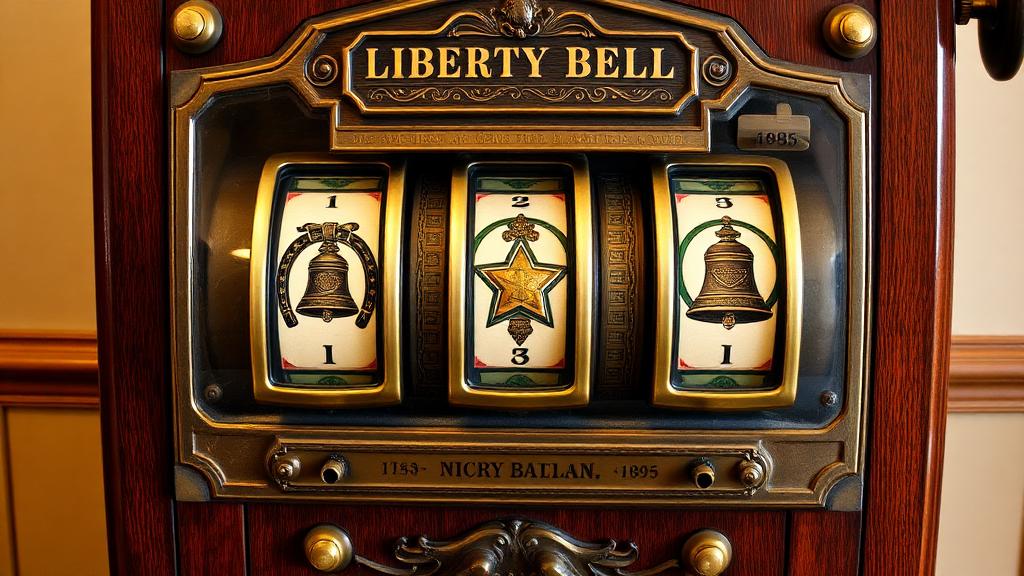
The story begins in 1895 when Charles August Fey, a German immigrant and mechanic in San Francisco, created the first true slot machine: the Liberty Bell. Unlike earlier gambling devices that required human intervention to determine payouts, Fey's invention was completely automatic.
The Liberty Bell featured three spinning reels with five symbols: horseshoes, diamonds, spades, hearts, and the iconic Liberty Bell. Three Liberty Bells in a row delivered the maximum payout of 50 cents—a substantial sum when the average worker earned $10 per week.
Fey's genius lay in the machine's simplicity and reliability. The automatic payout mechanism eliminated the need for attendants, while the limited number of symbols made odds calculation straightforward. This transparency helped build player trust, a crucial factor in the machine's success.
By 1907, Fey had established the first slot machine manufacturing company. However, his refusal to sell manufacturing rights led competitors to create variations. Herbert Mills introduced the "Operator Bell" in 1907, featuring fruit symbols that remain iconic today. The famous BAR symbol originated from the Bell-Fruit Gum Company logo.
These early machines spread rapidly through saloons, barber shops, and tobacco stores. Their popularity stemmed from their accessibility—unlike poker or blackjack, slots required no skill or knowledge, making them appealing to casual gamblers.
The Prohibition Era and Mechanical Innovation (1920-1960)
Prohibition in 1920 dramatically impacted slot machine development. With gambling increasingly restricted, manufacturers disguised machines as vending devices. Players received gum, candy, or cigarettes instead of direct cash payouts, though establishments often bought back prizes for money.
This period saw significant mechanical innovations. Mills introduced the "Silent Bell" in 1931, featuring improved noise reduction—crucial for speakeasy operations. The company also developed the first jackpot mechanism, where certain combinations triggered larger payouts from a separate coin reservoir.
The 1930s brought the "Money Honey" concept, though the famous Bally machine of that name wouldn't arrive until 1963. Manufacturers focused on reliability and security, developing sophisticated anti-cheating mechanisms as slot fraud became increasingly sophisticated.
World War II temporarily halted civilian slot production as manufacturers shifted to military contracts. However, post-war prosperity and the legalization of gambling in Nevada created unprecedented demand. Las Vegas emerged as the slot machine capital, driving innovation through competition.
Mechanical slots reached their zenith in the 1950s with multiple paylines, bonus features, and larger jackpots. However, mechanical limitations constrained further development. The industry needed a technological revolution.
The Electronic Revolution (1960-1990)
Bally's "Money Honey" in 1963 marked the transition to electronic slots. While still mechanical in nature, it featured an electronic hopper capable of automatic payouts up to 500 coins—revolutionary for its time. The machine's success demonstrated player acceptance of electronic components.
True video slots emerged in 1976 when Fortune Coin Company developed the first video slot machine in Las Vegas. Built on a modified 19-inch Sony television, this machine initially met player resistance. Gamblers questioned the fairness of computer-generated outcomes compared to visible mechanical reels.
The introduction of Random Number Generators (RNGs) addressed fairness concerns while enabling unprecedented game complexity. Electronic slots could feature multiple paylines, varied betting options, and bonus rounds impossible with mechanical systems.
International Game Technology (IGT) acquired Fortune Coin in 1978, accelerating video slot development. Their "Red White and Blue" series became incredibly popular, proving that players would embrace electronic gaming when properly executed.
The 1980s saw rapid advancement in video slot sophistication. Progressive jackpots linked multiple machines, creating life-changing prize pools. IGT's "Megabucks" launched in 1986, offering the first multi-million-dollar jackpots and fundamentally changing player expectations—these massive progressive and fixed jackpots worth playing right now continue to drive industry innovation and player engagement.
Much like how understanding odds calculation became crucial for sports betting enthusiasts—as detailed in guides explaining How to Read Football Odds – Decimal, Fractional, and American Formats Simplified—slot players began demanding more sophisticated gaming experiences with better odds transparency.
The Digital Age and Online Expansion (1990-2015)
The 1990s brought computerization and the first online casinos. Microgaming launched the first online casino in 1994, featuring digital slot games that could be played from home. This accessibility revolution expanded the slot market beyond physical casino visitors.
Land-based slots simultaneously evolved with improved graphics, sound, and interactivity. Bonus rounds became elaborate mini-games, while themes expanded beyond traditional fruits and bells to incorporate popular culture, movies, and television shows.
The introduction of ticket-in-ticket-out (TITO) systems in the late 1990s eliminated coin handling, improving hygiene and reducing maintenance costs. Players appreciated the convenience, while casinos benefited from reduced operational complexity.
NetEnt, founded in 1996, emerged as a pioneer in online slot innovation. Their "Gonzo's Quest" (2010) introduced cascading reels and 3D graphics that set new industry standards. The company's focus on mobile optimization proved prescient as smartphone adoption accelerated.
Progressive jackpots reached new heights with networked games spanning multiple casinos and jurisdictions. Microgaming's "Mega Moolah" and IGT's "MegaJackpots" created jackpots exceeding $10 million, generating massive media attention and player interest.
This period also saw the rise of branded slots featuring popular intellectual properties. From "Wheel of Fortune" to "Sex and the City," these games leveraged familiar brands to attract new demographics while commanding premium floor space in casinos.
The Modern Era: Megaways and Beyond (2015-2026)
Big Time Gaming's introduction of Megaways in 2015 revolutionized slot mechanics once again. This system features up to 117,649 ways to win through variable reel configurations, creating unprecedented excitement and engagement.
Megaways' success spawned numerous licensed implementations by other developers, demonstrating the industry's collaborative approach to innovation. The mechanic's mathematical complexity requires sophisticated RNG systems, showcasing how far technology has advanced since mechanical reels.
Mobile gaming dominance reshaped slot development priorities. Developers now design for mobile-first experiences, with desktop versions often being adaptations rather than primary focus. Touch interfaces enabled new interaction methods impossible on traditional button-based machines, making it essential for players to understand how to evaluate a new slot before you play using a quick checklist to ensure they choose games optimized for their preferred platform.
Virtual Reality (VR) and Augmented Reality (AR) represent the current innovation frontier. Companies like NetEnt and Microgaming have developed VR slots that immerse players in three-dimensional casino environments, though adoption remains limited by hardware costs.
Artificial Intelligence increasingly personalizes gaming experiences. Modern online slots analyze player behavior to adjust difficulty, suggest games, and optimize bonus timing. This personalization mirrors broader technology trends while maintaining regulatory compliance.
Similar to how live casino providers compete on technological innovation—as explored in comparisons of Evolution vs Pragmatic Play vs Playtech – The Big Three Live Casino Providers Compared for 2026—slot developers continuously push boundaries to capture market share.
Future Trends and 2026 Outlook
Looking toward 2026, several trends will shape slot machine evolution:
Cryptocurrency Integration: Bitcoin and other cryptocurrencies are increasingly accepted by online casinos, offering faster transactions and enhanced privacy. Blockchain technology may eventually enable provably fair gaming, addressing long-standing transparency concerns.
Social Gaming Features: Modern slots incorporate social elements like leaderboards, tournaments, and achievement systems. These features appeal to younger demographics while extending session lengths through community engagement.
Skill-Based Elements: Regulators are approving skill-based slot variations that allow player decisions to influence outcomes. These games bridge traditional slots and video games, potentially attracting esports-oriented players.
Enhanced Mobile Features: 5G networks enable more sophisticated mobile gaming experiences with minimal latency. Cloud gaming may eliminate device performance limitations, allowing console-quality graphics on smartphones.
Regulatory Evolution: Jurisdictions worldwide are updating regulations to address online gambling growth, with organizations like the UK Gambling Commission leading efforts to establish comprehensive frameworks for digital gaming oversight. Responsible gambling features like reality checks, loss limits, and AI-powered addiction detection are becoming mandatory.
The slot industry's ability to adapt and innovate has ensured its survival through prohibition, technological disruption, and changing consumer preferences. As we approach 2026, this adaptability positions slots to remain casino gaming's foundation while embracing emerging technologies.
From Charles Fey's mechanical Liberty Bell to today's AI-powered Megaways slots, the 131-year evolution demonstrates remarkable innovation. The next chapter promises even more dramatic changes as virtual reality, blockchain technology, and artificial intelligence reshape how we think about gambling entertainment.