
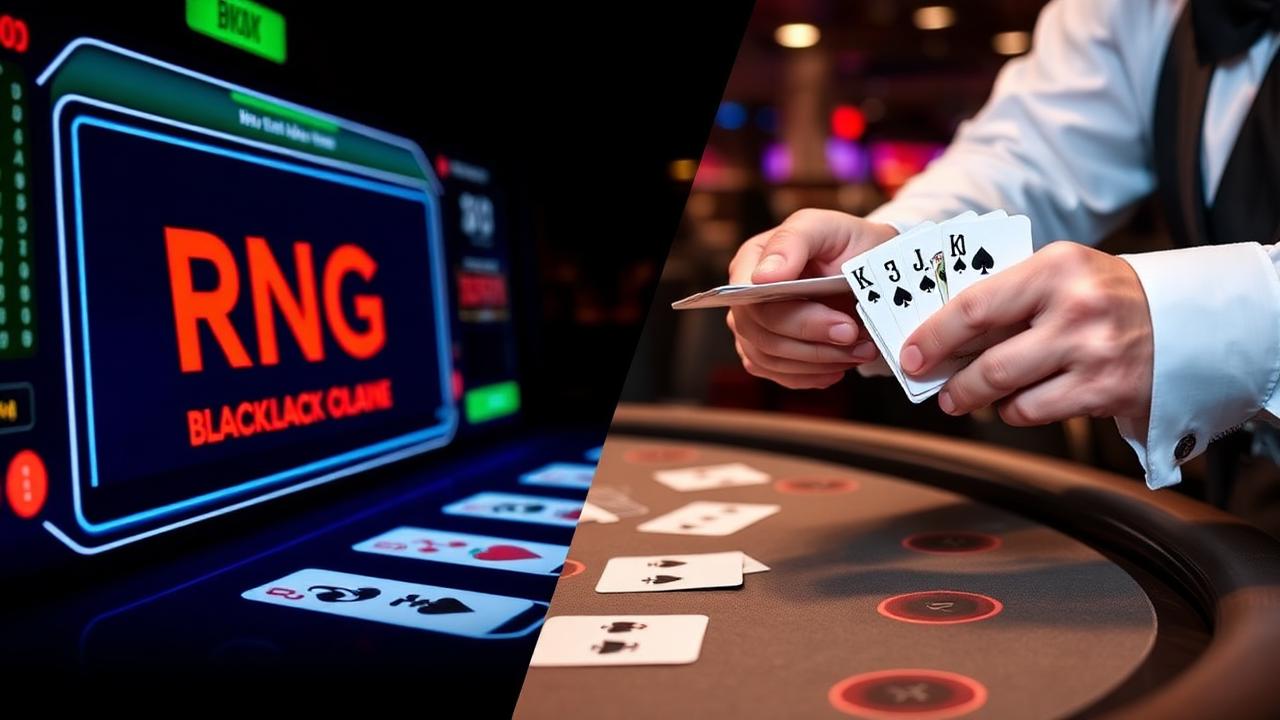
The evolution of online casino gaming has given players two distinct options for experiencing classic table games: Random Number Generator (RNG) games and live dealer tables. This fundamental choice shapes every aspect of your gaming experience, from the pace of play to the authenticity of interaction. Understanding the nuances between these two formats is crucial for optimizing your entertainment value and potential returns.
While both options offer legitimate paths to casino gaming, they cater to different player preferences, bankroll considerations, and gaming objectives. The decision between RNG and live dealer tables isn't merely about technology—it's about matching your personal gaming style with the format that best serves your needs.
Understanding RNG Table Games: Technology-Driven Gaming
RNG table games represent the digital evolution of traditional casino classics. These games utilize sophisticated algorithms to generate random outcomes, simulating the unpredictability of physical casino equipment. Modern RNG systems undergo rigorous testing by independent auditing firms like eCOGRA and iTech Labs to ensure mathematical fairness and true randomness.
The technology behind RNG games creates millions of potential outcomes per second, with the final result determined at the exact moment you place your bet or make a decision. This process mirrors the randomness of shuffled cards or spinning roulette wheels, but compressed into instantaneous digital calculations.
RNG games excel in providing consistent availability and rapid gameplay. Unlike live dealer tables with operating hours and seat limitations, RNG versions are accessible 24/7 without waiting periods. The automated nature eliminates human error while maintaining certified randomness that meets international gaming standards.
For players developing strategies or learning game mechanics, RNG games offer an ideal practice environment. The predictable interface and consistent rule implementation help players focus on decision-making without external variables affecting their learning curve.
Live Dealer Tables: Authentic Casino Atmosphere Online
Live dealer tables bridge the gap between online convenience and land-based casino authenticity. Professional dealers operate real equipment in studio environments, streaming high-definition video directly to players' devices. This format preserves the human element that many players associate with traditional casino gaming.
The production quality of modern live dealer studios rivals television broadcasts, featuring multiple camera angles, enhanced audio, and interactive chat functionality. Players observe actual cards being dealt, roulette balls spinning on physical wheels, and dice rolling across felt surfaces—all in real-time.
Interaction capabilities distinguish live dealer tables from their RNG counterparts. Players communicate with dealers through chat functions, creating social dynamics reminiscent of physical casinos. Some platforms even enable player-to-player communication, fostering community aspects often missing from digital gaming.
Authenticity comes with trade-offs, however. Live dealer tables operate on fixed schedules with limited seating capacity. Popular tables during peak hours may require waiting periods, and game pace depends on dealer efficiency and other players' decision speeds.
Gameplay Experience and Speed Comparison
The tempo difference between RNG and live dealer tables significantly impacts gaming sessions. RNG games process decisions instantly, allowing players to complete hundreds of hands or spins within an hour. This rapid pace suits players seeking maximum gaming volume or those with limited time windows.
Conversely, live dealer tables operate at human speeds, typically managing 30-40 hands per hour in blackjack or 25-30 spins per hour in roulette. While slower than RNG alternatives, this pace allows for more deliberate decision-making and enhanced enjoyment of the gaming process.
For players interested in faster-paced live gaming options, speed tables are attracting younger players who desire the authenticity of live dealers with accelerated gameplay. These variants compress traditional game timing while maintaining the human dealer element.
The psychological impact of game speed affects bankroll management and playing style. RNG games' rapid pace can lead to faster bankroll fluctuations, requiring disciplined betting strategies. Just like understanding slot volatility and variance helps players choose high or low risk games, recognizing how game speed affects risk exposure helps table game players select appropriate formats. Live dealer tables' measured pace naturally encourages more thoughtful bet sizing and decision-making.
Cost Factors and Betting Limits Analysis
Operational differences between RNG and live dealer tables create distinct cost structures that influence betting limits and player accessibility. RNG games require minimal ongoing costs after initial development, enabling operators to offer lower minimum bets and wider betting ranges.
Typical RNG table minimums start at $0.10-$1.00, accommodating casual players and those with smaller bankrolls. Maximum bet limits often reach $5,000-$10,000 or higher, providing flexibility for various betting strategies and player types.
Live dealer tables incur continuous operational expenses including dealer salaries, studio maintenance, and streaming technology costs. These factors typically result in higher minimum bets, commonly ranging from $1.00-$10.00, with some premium tables requiring $25+ minimums.
The cost differential extends beyond betting limits to overall session expenses. RNG games' speed can lead to more bets per hour, potentially increasing total wagering amounts despite lower individual bet sizes. Live dealer tables' slower pace naturally limits hourly wagering volume.
Similar cost considerations apply across different casino game categories. Just as players must choose the right slot for their playing style based on RTP, volatility, and features, table game selection requires matching format choice to bankroll size and betting preferences.
Trust, Fairness, and Transparency Considerations
Player confidence in game fairness represents a crucial differentiator between RNG and live dealer formats. Each approach offers distinct transparency advantages that appeal to different player psychology and trust preferences.
RNG games rely on mathematical certification and regulatory oversight for fairness assurance. Licensed operators display certification badges from testing agencies, and many games feature "Provably Fair" systems allowing players to verify individual hand or spin results. However, some players remain skeptical of computer-generated outcomes, preferring visible randomization processes.
Live dealer games provide visual transparency through real-time streaming of physical game equipment. Players observe cards being shuffled, cut, and dealt from physical shoes, or watch roulette balls settle into numbered pockets on actual wheels. This visibility addresses concerns about digital manipulation while creating confidence through observable randomness.
Regulatory frameworks govern both formats, with licensed operators required to maintain fairness standards regardless of game type. RNG systems undergo continuous monitoring and periodic recertification, while live dealer operations face scrutiny of studio procedures and equipment maintenance.
The perception of fairness often matters as much as mathematical reality. Players comfortable with digital systems may prefer RNG efficiency, while those valuing visual confirmation gravitate toward live dealer transparency.
Strategic Decision-Making: When to Choose Each Format
Optimal format selection depends on individual priorities, gaming objectives, and situational factors. Understanding these variables helps players maximize satisfaction and potential outcomes from their chosen gaming experience. For newcomers to online casinos, comprehensive guides covering slots, live tables, and all game types can help inform these format decisions alongside overall gaming choices.
Choose RNG table games when:
- Learning new games or practicing strategies without time pressure
- Playing with limited bankrolls requiring low minimum bets
- Seeking maximum gaming volume within specific time constraints
- Preferring consistent availability without scheduling considerations
- Focusing on mathematical strategy implementation without social distractions
- Valuing authentic casino atmosphere and social interaction
- Enjoying the ritual and ceremony of traditional table games
- Preferring visual confirmation of game fairness and randomness
- Having sufficient bankroll for higher minimum betting requirements
- Seeking entertainment value beyond pure gaming outcomes
Seasonal and promotional considerations may influence format choice. Live dealer tables often feature exclusive promotions and tournaments, while RNG games typically offer higher bonus contribution rates toward wagering requirements.
Technology Requirements and Accessibility
Technical demands differ significantly between RNG and live dealer platforms, affecting device compatibility and internet connectivity requirements. These factors can determine format accessibility for players with varying technological setups.
RNG games operate efficiently on virtually any internet-connected device, requiring minimal bandwidth and processing power. Basic smartphones, tablets, and computers can run RNG table games smoothly, making them accessible to the broadest player base.
Live dealer tables demand higher specifications for optimal experience. High-definition video streaming requires stable broadband connections (minimum 2-5 Mbps recommended), while multiple camera angles and chat functionality need adequate processing power and screen resolution.
Mobile optimization varies between formats. RNG games translate seamlessly to smaller screens with touch-optimized interfaces, while live dealer mobile experiences may compromise on visual detail or feature availability compared to desktop versions.
Accessibility features also differ. RNG games can incorporate text-to-speech, colorblind-friendly palettes, and simplified interfaces more easily than live dealer streams, which depend on visual elements and real-time video quality.
Future Trends and Innovation
The convergence of RNG and live dealer technologies promises exciting developments that may blur traditional format distinctions. Augmented reality integration could overlay digital information onto live dealer streams, combining visual authenticity with enhanced data presentation.
Artificial intelligence enhancement of RNG games may introduce more sophisticated dealer personalities and dynamic gameplay variations while maintaining certified randomness. Meanwhile, live dealer evolution continues toward higher production values, multiple language options, and specialized game variants.
Virtual reality represents the ultimate fusion potential, enabling immersive casino environments with both computer-controlled and human dealer options within shared virtual spaces. Early VR casino platforms demonstrate the technology's potential to revolutionize both format categories.
Blockchain integration may enhance transparency for both formats through immutable transaction records and decentralized fairness verification, addressing trust concerns while improving player confidence across all gaming types.