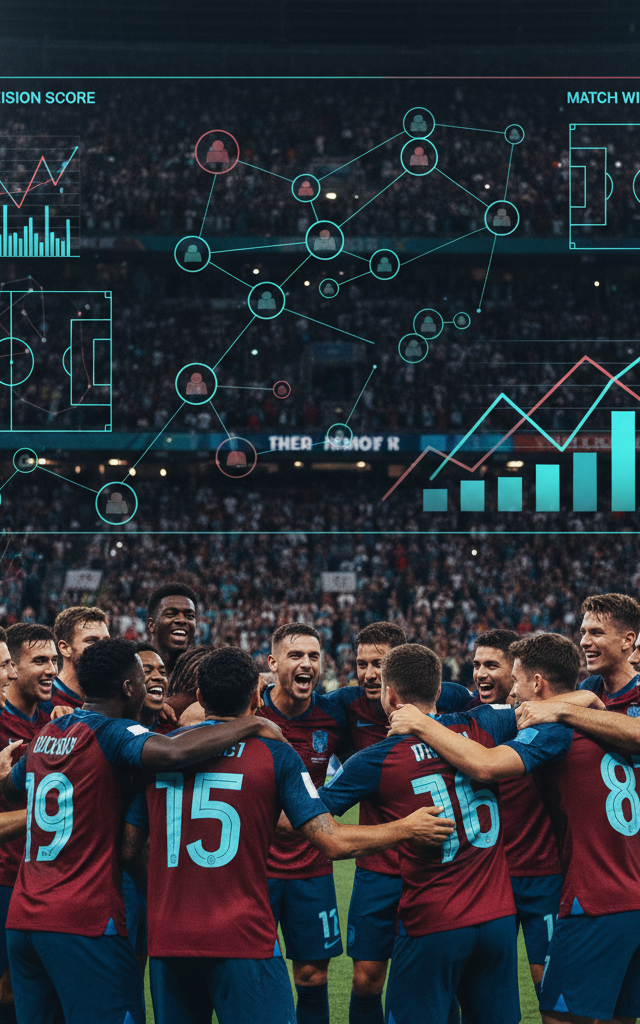

The FIFA World Cup has consistently delivered some of the most shocking upsets in sporting history, creating millionaires out of astute bettors who dared to back the underdogs. From Iceland's miraculous run in 2016 to Leicester City's Premier League triumph, football's unpredictable nature makes it a goldmine for those who understand how to identify value in long-shot bets.
As we approach the 2026 World Cup, hosted across North America, analyzing historical upsets provides invaluable insights into spotting profitable underdog opportunities. The tournament's expanded 48-team format creates even more potential for surprises, making this analysis more relevant than ever for serious sports bettors.
Understanding the psychology, circumstances, and betting patterns behind history's greatest World Cup shocks can transform your approach to tournament betting. This comprehensive analysis examines the most significant upsets, identifies common patterns, and provides actionable strategies for the upcoming tournament.
Historical Analysis of the Greatest World Cup Upsets
The 1950 World Cup delivered perhaps the most stunning upset in football history when the United States defeated England 1-0 in Belo Horizonte. England, featuring professional players at their peak, were considered unbeatable against a team of part-time American players. Bookmakers had offered odds as high as 500/1 against the USA, making this victory a perfect example of how tournament football can defy all logic.
South Korea's run to the semi-finals in 2002 represents another seismic shock that rewarded patient underdog bettors. Co-hosting the tournament, South Korea entered with 150/1 odds to reach the semi-finals. Their victories over Italy and Spain, both former World Cup winners, demonstrated how home advantage combined with tournament momentum can create extraordinary value opportunities.
Iceland's quarter-final appearance at Euro 2016, while not a World Cup, provides crucial insights for 2026 betting strategies. A nation with just 330,000 people defeating England showcased how tactical discipline and team unity can overcome superior individual talent. Their 80/1 pre-tournament odds to reach the quarter-finals created life-changing payouts for those who recognized their potential.
The 1966 North Korea team eliminated Italy in one of the tournament's biggest shocks, advancing from the group stage when most experts predicted immediate elimination. Pre-tournament odds of 1000/1 to progress beyond the group stage highlighted how political and cultural biases can create massive value in betting markets.
These historical examples reveal that successful underdog betting requires identifying teams with specific characteristics: strong defensive organization, exceptional team chemistry, favorable tournament circumstances, and crucially, public perception that significantly undervalues their true chances.
Key Factors Behind Successful Underdog World Cup Runs
Tactical flexibility emerges as the most critical factor separating successful underdogs from early exits. Teams like Greece in Euro 2004 and Denmark in Euro 1992 succeeded by adapting their systems to neutralize superior opponents. These teams typically employ compact defensive structures, rapid transitions, and set-piece expertise to maximize their limited opportunities.
Team chemistry and squad harmony often prove more valuable than individual talent in tournament football. Iceland's success stemmed from players who had grown up together, creating an unbreakable bond that translated into on-field resilience. This psychological advantage becomes amplified in knockout tournaments where mental strength determines outcomes.
Home advantage or favorable geographic circumstances consistently influence underdog success rates. The FIFA World Cup hosting statistics demonstrate that host nations consistently outperform pre-tournament expectations, with six of the last ten hosts reaching at least the quarter-finals despite modest pre-tournament odds.
Tournament draw luck cannot be understated in creating upset opportunities. Teams avoiding traditional powerhouses until later rounds often build momentum and confidence, making them increasingly dangerous as tournaments progress. Smart bettors analyze potential paths through the knockout stages when identifying value bets.
Managerial experience in tournament football frequently separates successful underdogs from those that crumble under pressure. Coaches who have navigated knockout competitions understand game management, substitution timing, and psychological preparation that proves crucial in tight matches.
Physical preparation and tactical discipline become magnified advantages when facing technically superior opponents. Underdog teams that maintain their shape, work rate, and concentration throughout 90 minutes consistently create upset opportunities through opposition frustration and late-game mistakes.
While football betting offers unique opportunities, experienced bettors often diversify their strategies across different gaming options. For those interested in exploring alternative entertainment during tournament breaks, examining The 10 Best Slot Series of All Time – From Book of Dead to Gates of Olympus and Their Sequels provides valuable insights into another form of strategic gaming.
Betting Strategies for Identifying Value in Underdog Teams
Successful underdog betting requires systematic analysis that goes beyond surface-level statistics. Focus on identifying teams whose odds don't reflect their true capabilities based on tactical fit, squad chemistry, and tournament circumstances rather than historical reputation or star power.
Qualification performance analysis provides crucial insights often overlooked by casual bettors. Teams that navigate difficult qualifying groups while maintaining defensive solidity and tactical discipline frequently translate this success to tournament football. Examine defensive records, set-piece conversion rates, and performance against quality opposition during qualification campaigns.
Recent tournament experience within squads creates invaluable advantages often undervalued by betting markets. Players who have experienced knockout pressure, hostile atmospheres, and tournament rhythms possess psychological advantages over theoretically superior teams lacking this experience.
Managerial tournament pedigree deserves significant weight in underdog analysis. Coaches with proven track records of organizing defensive structures, motivating players, and making crucial tactical adjustments during tournaments consistently outperform expectations regardless of squad limitations.
Group stage draw analysis reveals potential value opportunities before tournaments begin. Teams drawn in groups containing one clear favorite and two moderate opponents often present excellent value for progression bets, as they only need to outperform one comparable team rather than multiple quality sides.
In-tournament momentum betting provides dynamic opportunities as competitions unfold. Teams exceeding expectations in group stages often see their odds improve dramatically, yet their confidence and tactical familiarity make them increasingly dangerous opponents for supposedly superior teams.
Live betting during matches offers sophisticated bettors opportunities to capitalize on in-game developments. Underdog teams that maintain tactical discipline and stay within one goal often provide excellent value for draws or victories as tournaments progress and pressure mounts on favorites.
For those following multiple sporting competitions simultaneously, understanding tournament dynamics across different sports proves valuable. The analysis techniques used for World Cup betting translate effectively to other knockout competitions, as demonstrated in our Champions League 2025/26 Knockout Stage Preview – Matchups, Form Guide, and Betting Angles.
The Psychology of Tournament Football and Betting Markets
Public perception bias creates the foundation for profitable underdog betting in World Cup tournaments. Casual bettors consistently overvalue teams with recognizable star players while underestimating well-organized sides with strong tactical foundations. This systematic bias creates opportunities for informed bettors who focus on team functionality over individual brilliance.
Media narrative influence significantly impacts betting odds throughout tournaments. Teams receiving negative press coverage often see their odds lengthen beyond their true chances, while media darlings become overvalued regardless of underlying performance metrics. Successful bettors monitor these narratives while maintaining objective analytical frameworks.
Recency bias affects both public perception and bookmaker algorithms, creating value opportunities when teams' recent performances don't reflect their tournament potential. Underdogs that struggled in pre-tournament friendlies often provide excellent value when their preparation focused on tactical organization rather than results.
National pride and emotional betting from supporters consistently skew odds in favor of popular teams. Major footballing nations attract disproportionate betting volume regardless of their actual chances, inflating their odds artificially and creating value on their opponents.
Tournament pressure affects different types of players and teams in predictable ways. Star-heavy teams often struggle with expectation management, while underdog sides thrive on their freedom to play without pressure. Understanding these psychological dynamics provides edges in both pre-match and live betting scenarios.
Confidence momentum builds throughout tournaments in ways that betting markets struggle to accurately price. Teams that exceed expectations in early matches often carry psychological advantages into subsequent rounds that their odds don't fully reflect.
Preparing for 2026 World Cup Underdog Opportunities
The expanded 48-team format fundamentally changes underdog dynamics for the 2026 World Cup. More teams mean more potential upset candidates, but also increased variance in group compositions and knockout paths. Early preparation and thorough analysis become even more crucial for identifying value opportunities.
North American hosting across the United States, Canada, and Mexico creates unique geographical advantages for specific regions. Teams from CONCACAF will benefit from familiar conditions and reduced travel demands, potentially outperforming expectations against European and South American opposition adjusted to different climates and time zones.
Qualification processes currently underway reveal emerging underdog candidates worthy of early attention. Monitor teams exceeding expectations in challenging qualifying groups, particularly those demonstrating tactical evolution under experienced international coaches.
Betting market preparation requires establishing accounts with multiple reputable operators to ensure access to the best odds and promotional opportunities throughout the tournament. Early season positioning allows access to enhanced odds and special promotions typically unavailable closer to tournament dates.
Research infrastructure development proves crucial for tournament success. Create systems for tracking team news, injury updates, tactical analyses, and line movement across multiple markets. The six-month gap before the tournament provides ample time to develop comprehensive analytical frameworks.
Bankroll management planning ensures sustainable betting throughout the tournament's extended format. The increased number of matches and longer duration requires disciplined staking strategies that can withstand inevitable losing periods while maximizing profitable opportunities.
Early odds monitoring reveals market inefficiencies that disappear as tournaments approach. Tracking odds movement patterns from previous tournaments helps identify optimal timing for various bet types and market positions.
Learning from Past Mistakes: Common Betting Pitfalls to Avoid
Overstaking on single outcomes represents the most common mistake among underdog bettors. While the potential returns from backing long shots appear attractive, risking significant portions of bankrolls on individual bets leads to inevitable ruin despite occasional successes. Successful underdog betting requires patience and disciplined stake sizing across multiple opportunities.
Ignoring squad depth and tournament demands causes many bettors to overvalue teams that lack the resources for sustained tournament runs. Underdogs succeeding in World Cups typically possess adequate squad depth to handle injuries, suspensions, and fatigue across multiple matches.
Chasing losses through increasingly aggressive betting destroys more tournament bankrolls than poor analysis. Maintaining predetermined staking strategies regardless of early results prevents emotional decision-making that compounds losses during inevitable difficult periods.
Focusing exclusively on match result markets limits profitable opportunities throughout tournaments. Exploring alternative markets like handicaps, total goals, and player props often provides better value, particularly for underdog teams likely to perform better than expected without necessarily winning matches.
Neglecting in-tournament adaptations costs bettors significant value as competitions progress. Teams that exceed or fall short of expectations often see their odds adjust more slowly than their actual performance levels warrant, creating ongoing opportunities for alert bettors.
Understanding these historical patterns and psychological factors provides the foundation for profitable underdog betting in the 2026 World Cup. Success requires combining analytical rigor with emotional discipline, focusing on long-term profitability rather than individual bet outcomes.